01 · Context & Problem
An RFP with no brand to work from
The client trains people to teach English abroad. They sent out an RFP for a website redesign, with a bigger project behind it: the student platform. They pitched it to 25+ agencies worldwide.
We had their brief and the competitors they admired, but no new corporate identity. Their rebrand wasn’t ready yet, so anything we designed risked being thrown away the moment it landed.
02 · The Insight
Show them. Don’t tell them.
Most RFP responses look the same: research, process diagrams and a page on how the agency works. The client would be reading 25 of them.
So we flipped it. Instead of describing what we would do, we would show them: two working concepts they could click through on their own laptop or phone, before they had even chosen a partner.
03 · The Breakthrough
A brand rebuilt as tokens
This was the first real test of a design workflow I had built for the studio. With no new CI to work from, I took the client’s live website and tokenised it: the colours, the typography, everything. That became their brand infrastructure, and I built a design system on top of it.
The payoff is that nothing is hard-coded. When the new CI arrives, we swap the tokens and every screen in both concepts updates at once. One switch, not a rebuild.
One source · every screen
The client’s current website, tokenised as it stands
Their rebrand, ready to drop in
Every component inherits the tokens
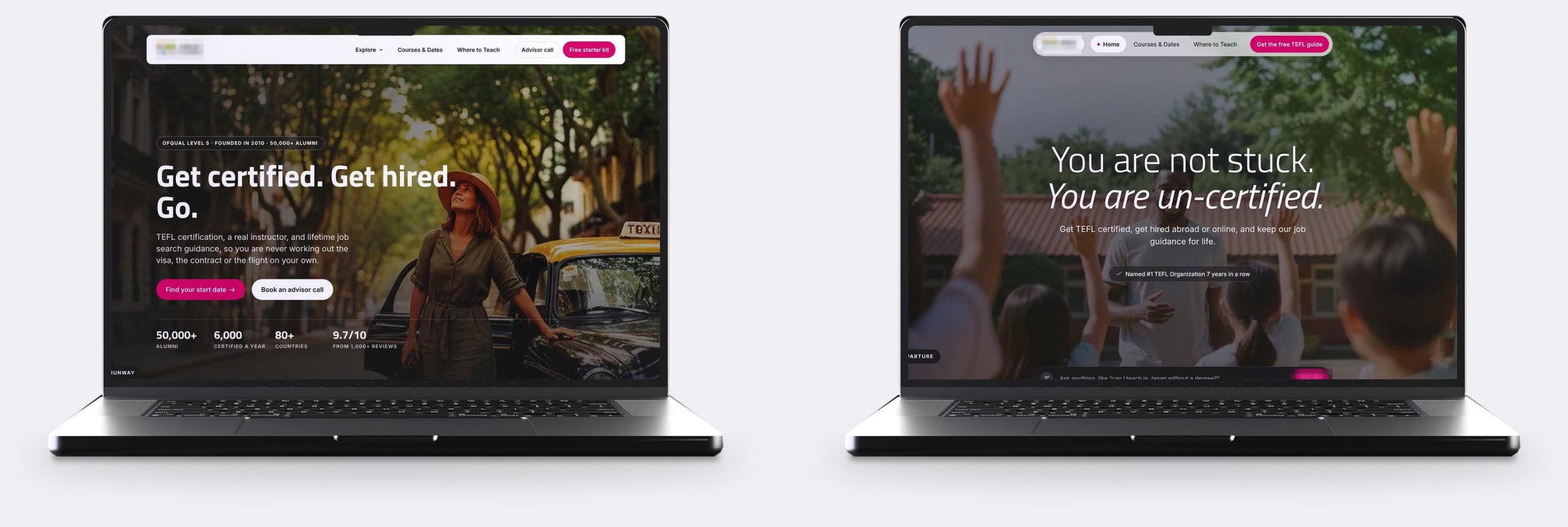
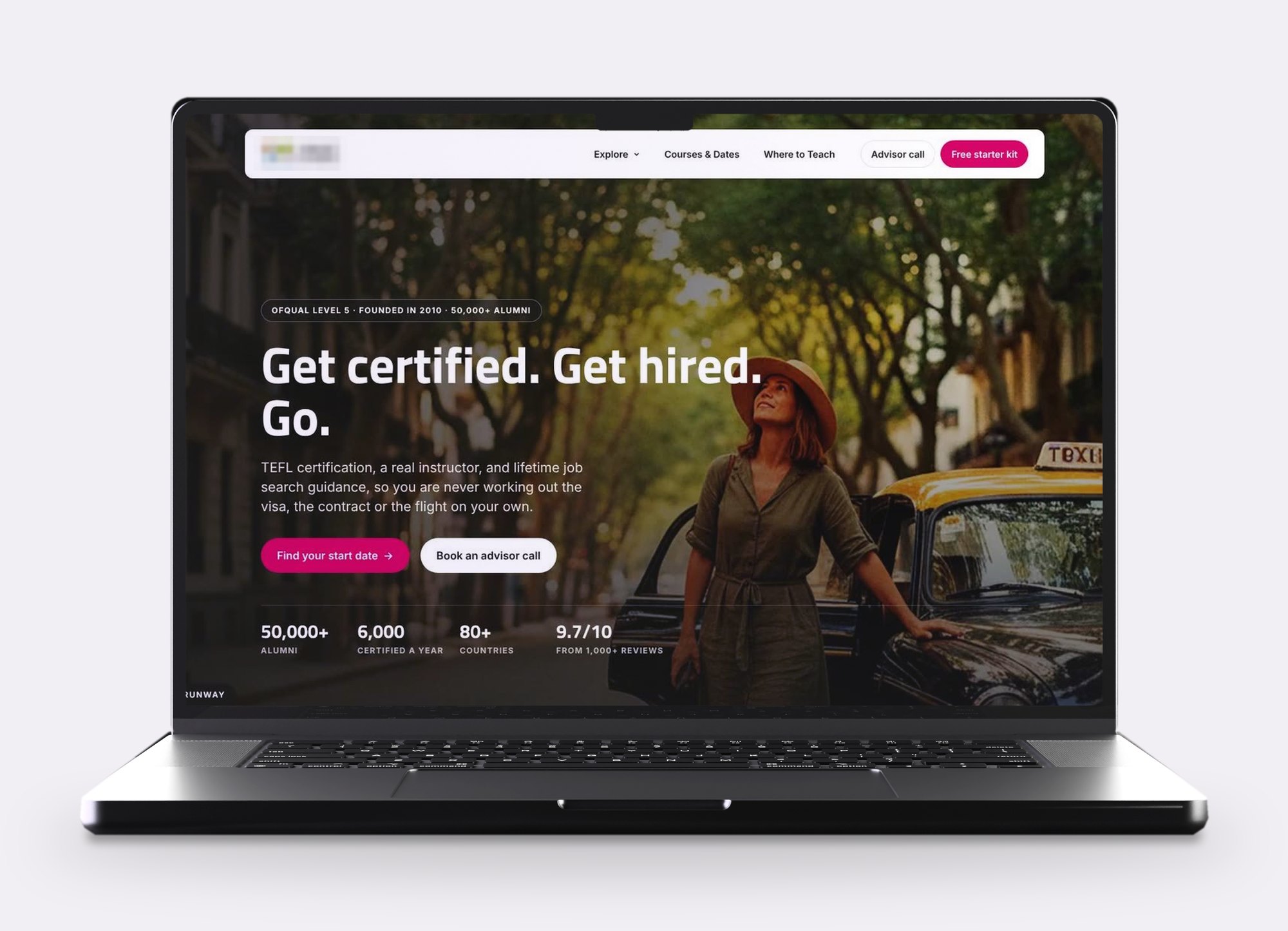
For younger students deciding with their parents
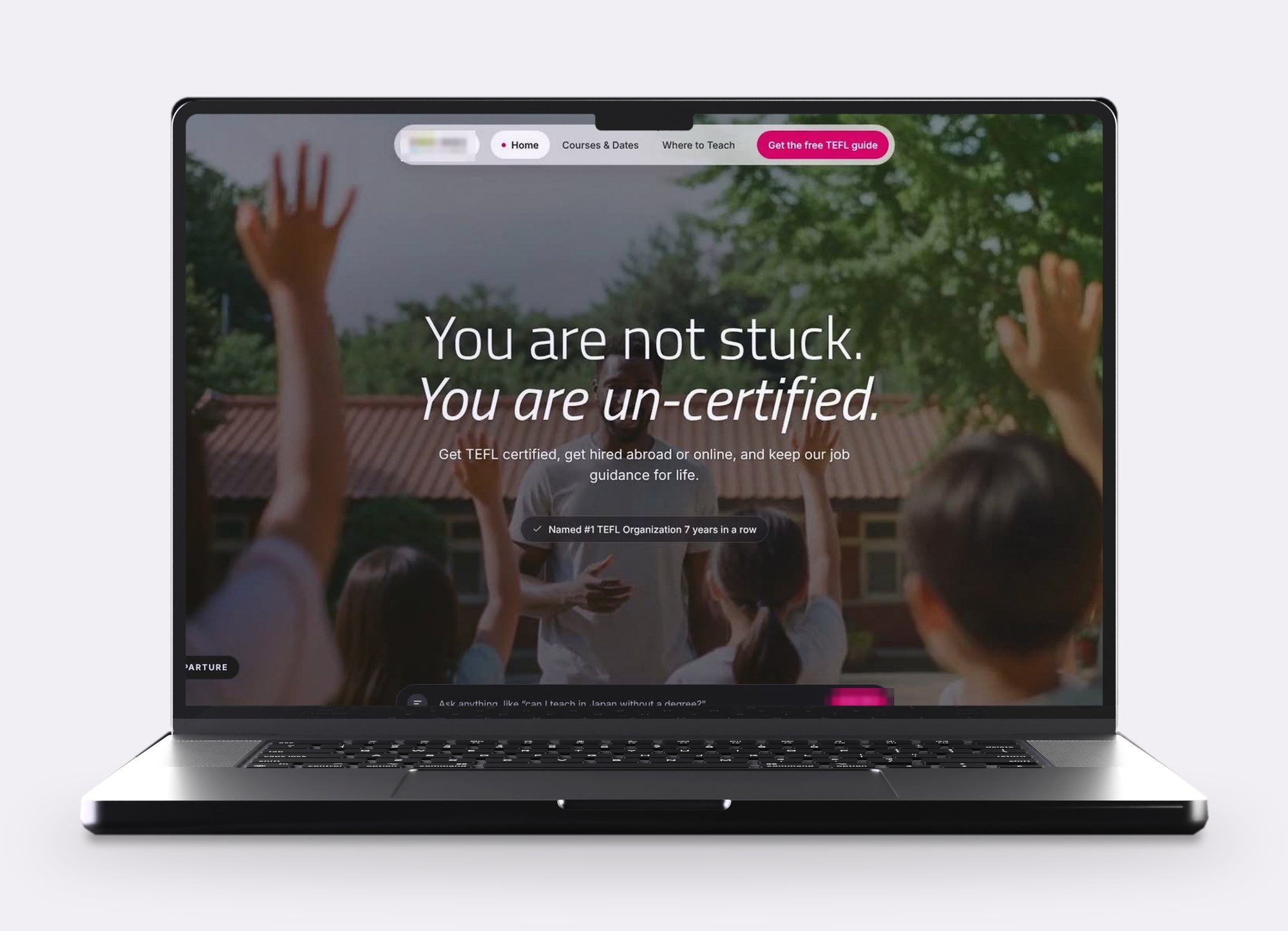
For self-sufficient explorers: ask the brand anything
04 · Exploring Directions
Two concepts, two kinds of student
The client’s students aren’t one audience. Rather than average them into one safe design, we gave each group its own concept, both running on the same tokens.
05 · Designing the Pitch
From live site to clickable prototype
Tokenise
Captured the current brand straight from the client’s site and turned every colour and type style into tokens.
Systemise
Built a design system on those tokens, so every component inherits the brand and a rebrand only has to change one layer.
Prototype
Designed both directions, then shipped them in the lightest code possible, as clickable prototypes the client could open on a laptop or a phone.
Present
Our project manager opened, and each of us took our part: strategy lead, head of design, AI engineer, software developer and me. Everyone was prepared, and the whole pitch pointed one way.
06 · The Outcome
Chosen as their partner
Two things set us apart: speed, and how we presented as one team. The client loved that our proposal came with real visuals they could use, not a write-up of how we work.
The client chose Velocity Labs. They have since shared their new CI, and because the system runs on tokens, bringing it in is a switch, not a redesign.
07 · What’s Next
Discovery, then design
We’re in the discovery phase with the client now. Next comes the design phase: the website first, then the student platform, both on the same token system that won the pitch.
08 · Takeaway
The fastest way to earn trust is to show the work
A token-first workflow let a six-person team turn an RFP into two working prototypes, and turned the client’s rebrand from a risk into a switch.